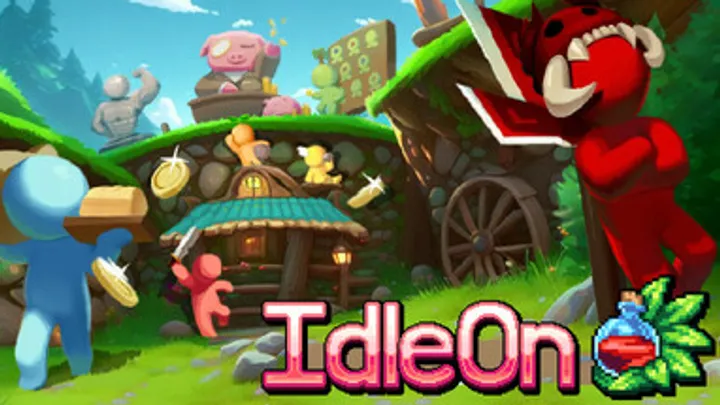





Most MMORPGs treat alternate characters as optional extensions—secondary builds created for experimentation, resource funneling, or long-term engagement. In traditional design, “alts” are supplemental. IdleOn inverts this hierarchy. Instead of centering one primary avatar, it transforms multi-character management into the backbone of progression.
IdleOn does not merely allow multiple characters; it requires them. Each class contributes to a shared account-wide ecosystem that persists even when offline. This article examines how the game restructures MMORPG logic by turning alt micromanagement into a synchronized idle production network.
1. Character Creation as Infrastructure, Not Identity
In most RPGs, the first character defines the experience.
In IdleOn, the first character is only the beginning of an expanding roster.
Subsequent characters are not narrative alternatives but functional units. They gather resources, specialize in professions, and feed a collective system.
2. Parallel Progression Architecture
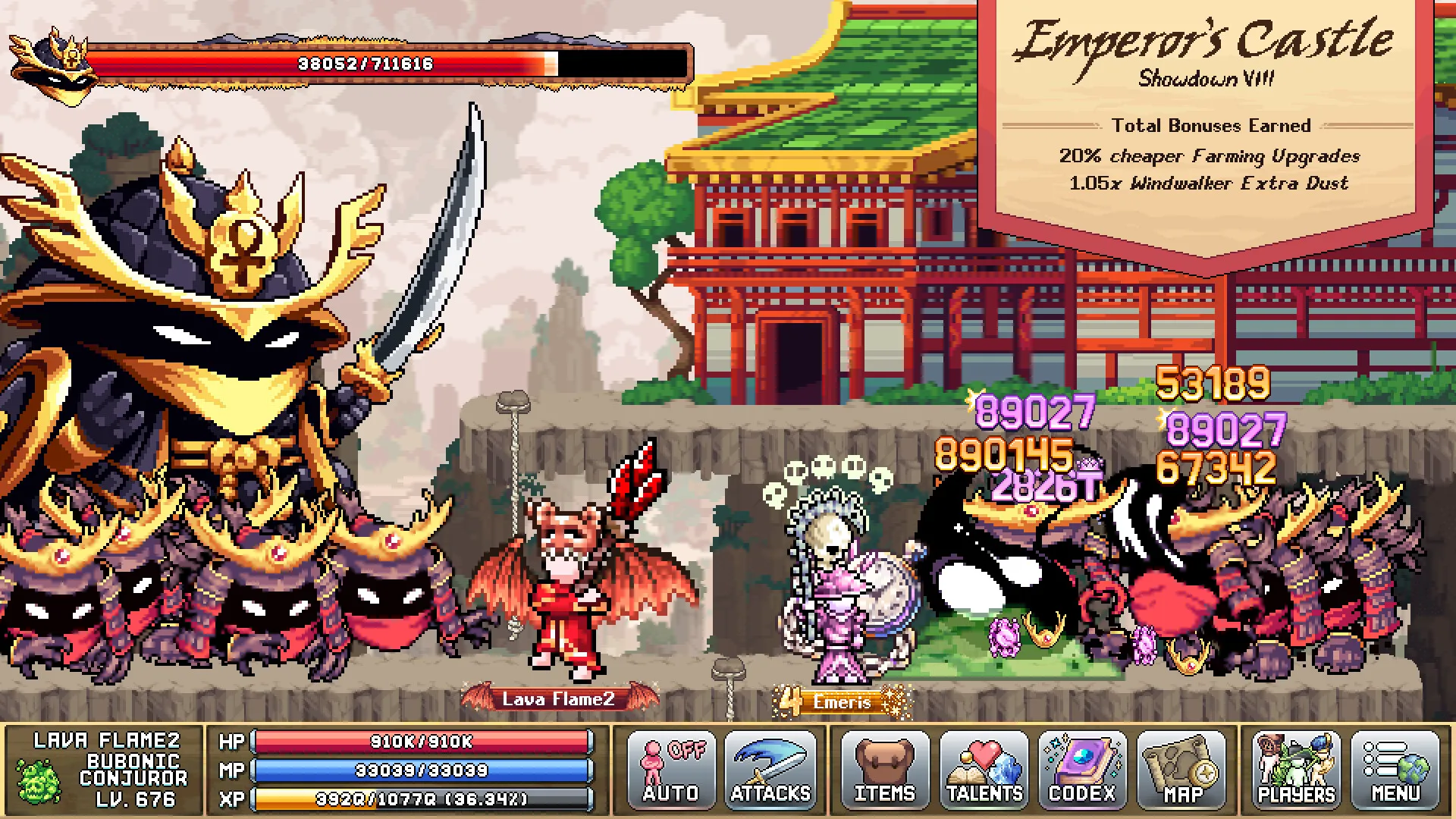
Characters operate simultaneously.
While one actively fights, others mine, chop wood, fish, or craft.
Distributed productivity
Progress accumulates in parallel rather than sequentially.
Time becomes an economy spread across avatars.
3. Class Specialization as Economic Role Assignment
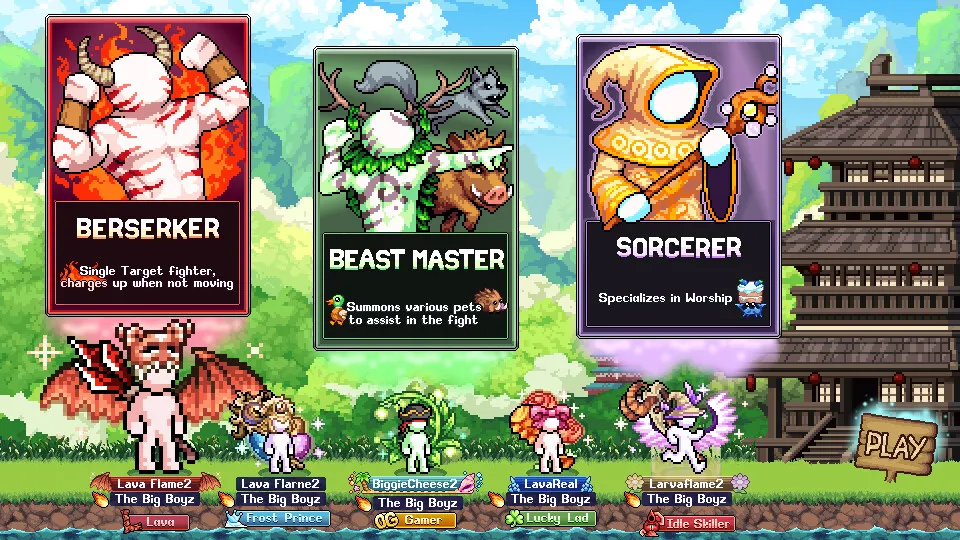
Each class branches into distinct subclasses.
Warriors, Mages, and Archers evolve into highly specialized roles.
Functional compartmentalization
One character might focus exclusively on mining efficiency, while another maximizes combat farming.
Optimization becomes workforce management.
4. Offline Gains as Persistent Output
Idle systems calculate production even when the player logs off.
This ensures constant accumulation.
Temporal compounding
The longer characters are assigned properly, the more exponential the growth.
Planning outweighs moment-to-moment execution.
5. Shared Storage and Resource Circulation
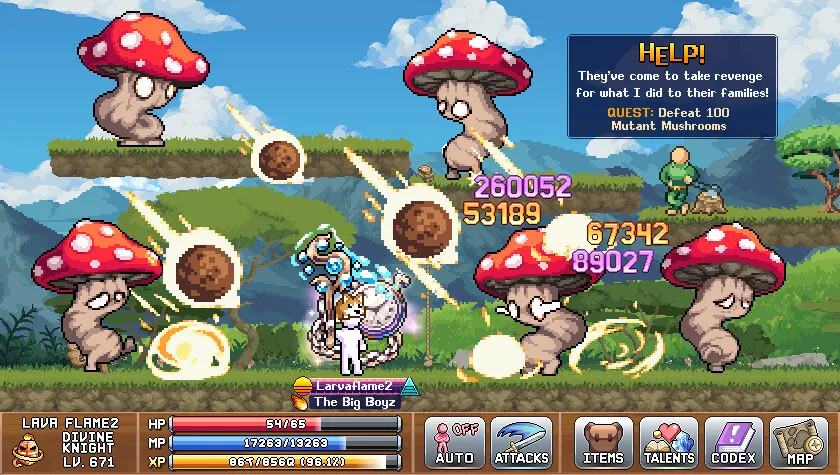
All characters feed into a unified storage system.
Resources mined by one can fund upgrades for another.
Closed-loop economy
Interdependency creates structural cohesion.
No character exists in isolation.
6. Skill Systems as Layered Multipliers
Professions provide bonuses that cascade across systems.
Mining improves equipment. Equipment boosts combat. Combat unlocks new maps.
Multiplicative stacking
The design rewards synergy rather than individual excellence.
System awareness becomes more valuable than mechanical precision.
7. World Unlocks Through Collective Milestones
New worlds require thresholds met across characters.
Progression gates depend on cumulative output.
Account-level advancement
The “main character” becomes the account itself.
Individual identity dissolves into system scale.
8. Automation and Diminishing Micromanagement
As systems mature, automation tools expand.
Task reassignment becomes streamlined.
Strategic oversight
The player transitions from participant to manager.
The gameplay loop shifts toward macro-level decision-making.
9. Social Systems Within Idle Framework
Guilds and multiplayer interactions exist but do not disrupt idle focus.
Social features complement rather than dominate progression.
Asynchronous coexistence
Players share space without requiring synchronized activity.
The design preserves idle autonomy.
10. Why Alt Management Must Be Central
If IdleOn prioritized a single avatar, its systems would fragment.
The game’s identity depends on multi-character orchestration.
By transforming alt creation into mandatory infrastructure, IdleOn builds a persistent production engine rather than a traditional hero journey. Progress is not defined by a protagonist, but by a coordinated network of specialists.
Conclusion
IdleOn reimagines MMORPG structure by elevating alternate characters from optional extras to essential components. Through parallel progression, shared storage, and cascading multipliers, the game constructs a self-sustaining idle economy driven by coordinated specialization. The player’s role evolves from adventurer to systems architect.
This inversion of MMORPG priorities—where the account supersedes the avatar—creates a uniquely layered progression loop. IdleOn succeeds not by simplifying MMO complexity, but by reorganizing it into an idle-compatible framework. The result is a design where management, planning, and synergy eclipse traditional notions of singular character mastery.